OEM vs ODM Charger: Which Is Right for Your Brand?
Read three guides on this and then email a Chinese factory, and you'll find the words seem to mean the opposite. They do. Here's what each term means on our side of the table, and how to choose.
Read a few guides on OEM vs ODM charger manufacturing, then email a factory in China, and there's a good chance you'll ask for "ODM" while meaning exactly what the factory calls "OEM". You wouldn't be confused. The terms are.
Western guides and Chinese factories use the two terms in different ways. Once you know that, the whole subject gets simple. I work at Rongjun, a GaN charger factory in Dongguan, and we run both kinds of project every month. This guide explains both meanings, then what each one involves in practice for a charger: cost, minimum order, certificates and who owns what.
The same words, two meanings
The guides that rank for this question, from SEACOMP and inFlow, use the Western business meaning. In that world, the OEM is the brand that owns the design (think of a laptop company), and the factory that builds it is a contract manufacturer. An ODM is a manufacturer that designs a product itself and lets other companies put their name on it. inFlow even uses phone chargers as its example of an ODM product.
Chinese factories, including us, use the words from the other side. When we say OEM, we mean we make one of our existing chargers with your brand on it. When we say ODM, we mean we design a new charger for you.
| What you want | Western guides call it | A Chinese charger factory calls it |
|---|---|---|
| Your logo and box on an existing charger | ODM, private label or white label | OEM |
| A new charger designed for you by the factory | ODM with custom development, or "JDM" | ODM |
| Your own engineers' design, built by the factory | OEM (you) + contract manufacturer (factory) | Contract manufacturing / OEM to your drawings |
Neither side is wrong; they're describing the same relationship from opposite ends. The practical lesson is to describe what you want in plain words in your first email ("your existing 65W charger with our logo and box" or "a new 100W design with these ports"), and let the factory reply with its own label. From here on, I'll use the factory meaning.
OEM at a charger factory: your brand on our charger
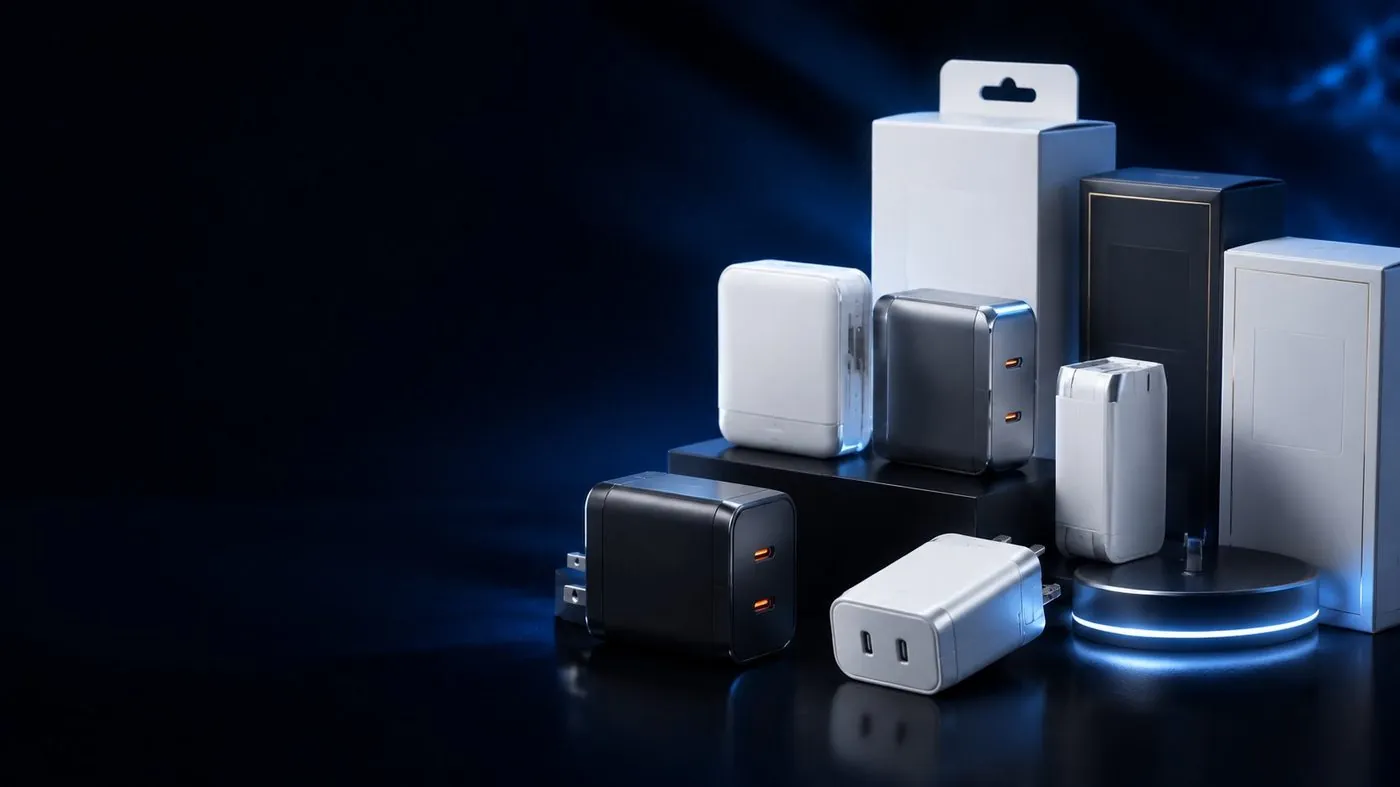
This is how most charger brands start. You pick a model from the range, and we make it with your branding. What you can change:
- Logo on the housing. No setup fee, free mockup first.
- Plug type from the options the model has (US, EU, UK, AU, CN).
- Port layout where the model offers versions, e.g. our XFC 35W as 1C, C+A or 2C.
- Colour: black and white as standard; custom colours from 1,000 pieces, free from 3,000.
- Packaging: bulk strips, plain white box, or your printed retail box from 1,000 pieces.
What stays the same: the circuit, the chips, the housing shape, and therefore the test reports. That's the point. You get a charger that's already been tested and built many times, with your name on it. The minimum is 500 pieces per model, or 300 on request for a first trial, and 1,000 pieces take 10 to 15 days to produce once the sample is approved.
ODM at a charger factory: a new charger for you
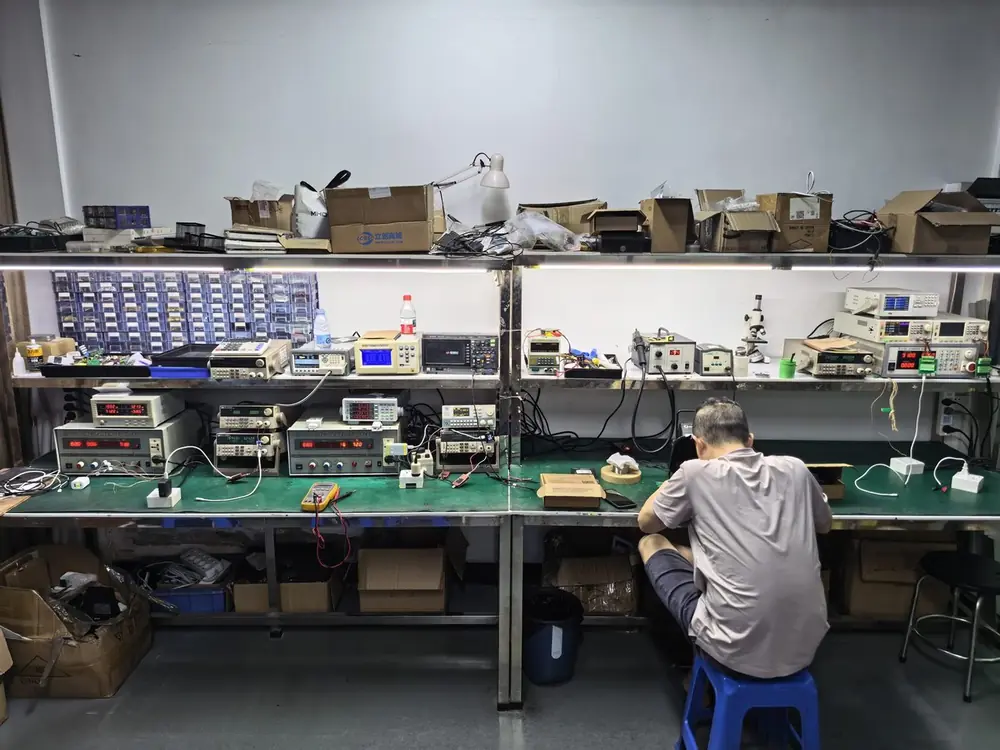
ODM is for when nothing in the range fits: a wattage, port layout, size or look that doesn't exist yet. Our engineering team (25 people covering circuit, PCBA, transformer, thermal design and firmware) develops it from your brief, sketch or reference sample.
An ODM project usually involves:
- The brief. Wattage, ports, size, target markets and plugs, the look, and the target price. We sign an NDA before you share designs.
- Engineering review. What's feasible, what it changes, and a timeline.
- Design. Circuit and PCBA, transformer, housing, PD settings.
- Tooling. A mould for the new housing.
- Samples and changes. You test on real devices; we adjust.
- Certification. A new circuit or housing needs its own safety and EMC testing.
- Pilot and production.
Our ODM minimum is 5,000 pieces, because the tooling, engineering time and certification have to be spread over a meaningful run. If you'd like a head start, we can send our ODM design catalogue: designs that are partly developed and can be adapted, which is often quicker than starting from a blank page. Two of our housing designs are registered design patents in China (CN 308679717 S and CN 308510839 S), which gives you an idea of how much of this work happens in-house.
OEM vs ODM charger, side by side
| OEM (factory meaning) | ODM (factory meaning) | |
|---|---|---|
| Design | The factory's existing charger | New, developed for you |
| What you change | Logo, colour, plug, port option, packaging | Wattage, ports, size, housing, PD settings |
| Minimum order (ours) | 500 pcs (300 on request) | 5,000 pcs |
| Tooling | None | New mould |
| Certificates | Existing model's test reports | New certification run |
| Time to first goods | Samples in 3 days, production 10–20 days | Timeline set per project |
| Differentiation | Brand, packaging, price, listing | The product itself |
| Best for | Launching, testing a market, most brands | Proven brands that need something nobody else sells |
Who owns the design, the mould and the IP
inFlow's guide is right that ownership is the real dividing line, and it applies in both vocabularies.
- OEM (our existing models): the design, the mould and the test reports are ours. You own your brand and your packaging artwork. Other brands may sell the same base charger with their own branding, unless you agree something specific.
- ODM (new design for you): who owns the mould, the design and any exclusivity is agreed in the project contract before the mould is made. We sign an NDA before you share anything.
Whatever you agree, write it down: mould ownership, what happens to the mould if you stop ordering, any exclusivity (which markets, how long) and confidentiality. SEACOMP and inFlow both make this point, and it's the part buyers most often regret skipping.
Certificates: what carries over and what doesn't
This is one of the strongest arguments for starting with OEM. A charger's safety and EMC test reports cover a specific design. Putting your logo on it, changing the box or choosing a different standard colour doesn't change how the charger behaves electrically, so the existing reports still cover it. Our certifications page shows which reports each model has.
A new circuit, a new transformer or a new housing material is different: the product has to be tested again. That's time and cost you only want to spend once you know the product will sell. inFlow also notes that in the Western OEM model the brand is more likely to be treated as the manufacturer for compliance purposes. In either case, make sure the documents match the product you actually sell. Our European certifications guide lists what's needed.
Which one fits your brand
- New brand, first product: OEM. Prove the market with a tested charger before paying for tooling.
- Selling well, customers asking for more: OEM across a few models, with your own colour and box.
- Clear product idea nobody sells, volume to match: ODM, starting from our design catalogue if one is close.
- Your own engineers and drawings: contract manufacturing to your design; we'll review what's needed for certification.
The sensible order is usually OEM first, and ODM later for one hero product once the sales numbers justify the tooling. That keeps the risk low.
Questions to ask before an ODM project
Not every factory that says "ODM" has a real engineering team. Some will take your brief and pass it to a design house you never meet. These questions help you tell the difference, and they're worth asking us too:
- Who will do the design work? Names and roles: circuit, transformer, housing, firmware. Are they on site?
- Can we see a recent design you developed? Even without the client's name, a factory with real ODM work can show housings, boards or patents.
- What will need to be certified again? A good engineer will tell you straight away which tests a change triggers.
- Who owns the mould, and what happens to it if we stop ordering? Get this in the contract.
- Is there exclusivity, and on what? The whole design, the housing only, in which markets, for how long.
- What's the minimum order, and is it per colour or plug type?
- What happens if the first samples don't meet the brief? How many rounds of changes are expected?
- Will you sign an NDA before we share anything? We do.
Signs a factory can really do ODM
Engineers you can actually talk to on a call. Design patents or a portfolio of housings it developed. A clear answer on which tests a change needs. A catalogue of semi-developed designs. And an honest minimum order that reflects tooling and certification, rather than an ODM offer at the same quantity as a logo order, which usually means the "new design" is someone else's existing product.
How to brief either project
For OEM, send: the model, plug types, port option, quantity per version, your logo (vector file), colour, packaging choice and target market. We'll send a mockup and a quote.
For ODM, send: what the charger must do (wattage, ports, devices), size limits, the look you want (sketches or reference products), markets and plugs, target price and expected annual volume. After the NDA, our engineers will review it and come back with what's feasible and a timeline. Our OEM / ODM page has the full process.
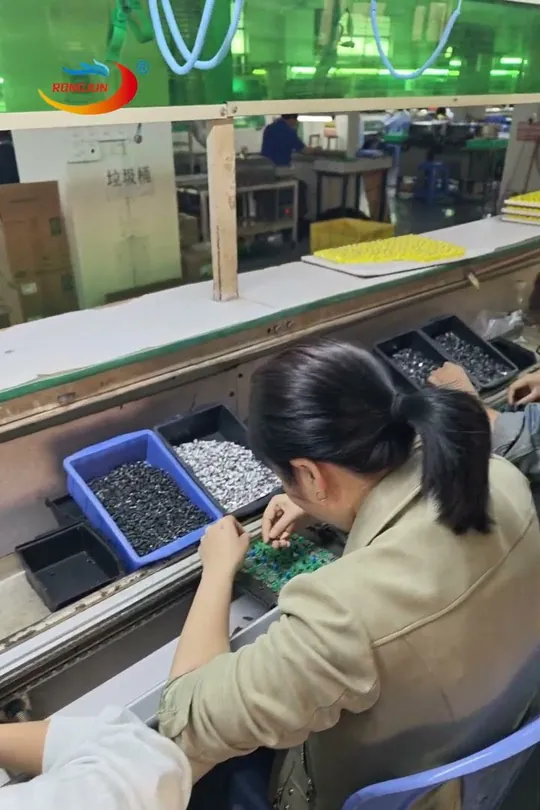 Where OEM and ODM chargers are built: our factory in 29 seconds
FAQ: OEM vs ODM charger
What is the difference between an OEM and an ODM charger?
Which is cheaper, OEM or ODM?
What is the MOQ for OEM and ODM chargers?
Who owns the mould on an ODM charger project?
Does an OEM charger need new certification?
Is private label the same as OEM?
Can I change the charger's ports or wattage in an OEM order?
How long does an ODM charger project take?
Do you have ready ODM designs to start from?
Do I need an NDA for an OEM order?
OEM or ODM, tell us what you have in mind
Send the model you like, or a brief for something new. We'll reply with an OEM quote and mockup, or with our engineers' first view on an ODM project.
Get a quoteMore from the Rongjun buyer's library
GaN charger OEM and ODM
Our OEM and ODM service, step by step, with minimums and timelines.
Private label vs white label
What each really means at a charger factory, and which to choose.
How to start a phone charger brand
From niche and first product to pricing and the first year.