
How to Negotiate MOQ with Chinese Suppliers
Most MOQ advice comes from sourcing agents. This one comes from the other side of the table: a charger factory in Dongguan explaining what the minimum really pays for, and which requests we actually say yes to.
Every week someone writes to us with roughly the same message. They like a charger, they want their logo on it, and 500 pieces feels like too many for a first order. Fair enough. Nobody wants a pallet of stock they can't sell.
Most guides on how to negotiate MOQ with Chinese suppliers are written by sourcing agents, and the good ones are useful. But they describe the factory from the outside. I work inside one. I lead R&D at Rongjun, and a fair part of my week goes on exactly these conversations with buyers in the UK, Europe and the Gulf. So this is how the minimum looks from our side, with our real numbers, and the requests that tend to work.
The short answer
An MOQ is not a wall. It is the quantity where the factory's fixed costs (materials bought in batches, line setup, outside printing) stop hurting. Ask for the standard quote, then prices at a few quantities. Find out which cost sets the minimum and offer to remove it: standard colour, neutral packing, a bit more per piece on the first run, or a written plan for the reorder. Pushing the number down with nothing in return almost never works.
Why Chinese suppliers set an MOQ at all
When a quote says "MOQ 1,000 pcs", that single number is usually hiding two or three separate costs. You negotiate much better once you know which one you are up against. For a USB-C charger, these are the usual suspects.
Materials come in batches
We don't buy parts one at a time. GaN switching chips arrive on reels of a few thousand. Flame-retardant PC resin for the housing comes in 25 kg bags, which is enough for well over a thousand shells. Transformers, capacitors and USB-C connectors are bought by the reel or tray as well.
With standard black or white housings this hardly matters, because the leftovers go into the next order. With a custom colour it matters a lot. We mix a resin batch just for you, and whatever your order doesn't use is waste. That is why our custom-colour minimum is 1,000 pieces, and why it becomes free of charge at 3,000.
Every job needs a line changeover
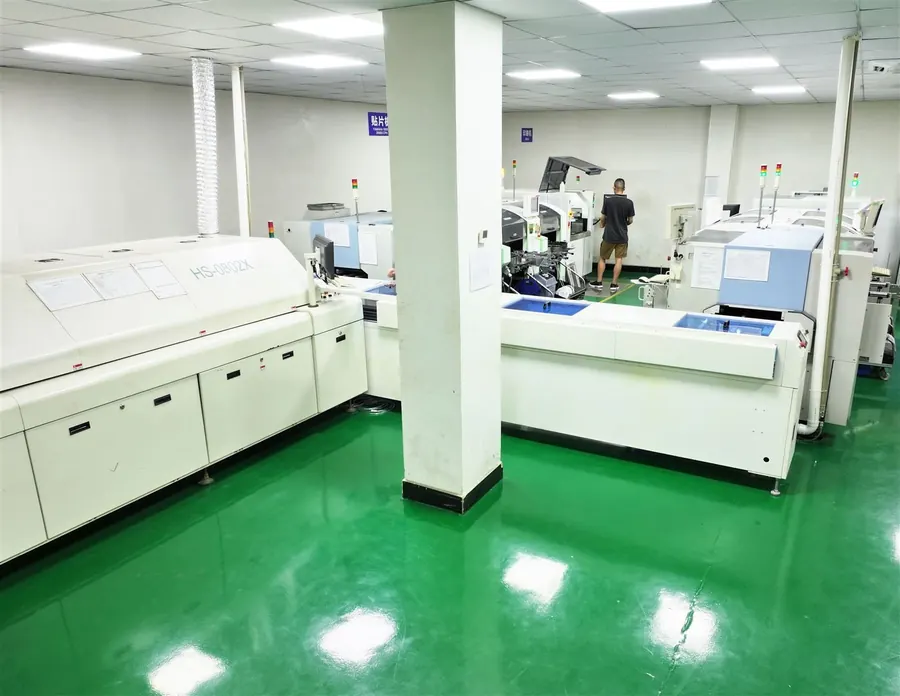
Before your boards run, the SMT line has to be set up for them: new stencil, new reels loaded onto the feeders, the placement program checked, and a first board inspected before the rest go through. On any SMT line that takes a good part of an hour or more, and it costs the same whether we then build 300 boards or 30,000. Spread over a big run, nobody notices. Spread over a tiny one, it shows up in the unit price.
Outside suppliers have their own minimums
This is the one that catches people out. We can agree to a small charger order, but the printing house that makes custom retail boxes works with plates and ink setups, and they won't print a few hundred. Our custom box minimum is 1,000 pieces for that reason. It has nothing to do with the charger.
So before you argue about the number, ask a plain question: "Is this minimum coming from materials, from the line, or from the packaging?" If it's materials, change the spec. If it's the line, accept a small premium or combine models. If it's the packaging, change the packaging. Different problem, different fix.
Our charger minimums at a glance
Put together, this is what the minimums look like on our USB-C chargers. Other factories will differ a little, but if a quote is wildly off these numbers in either direction, it's worth asking why.
| What you order | Minimum | What sets it |
|---|---|---|
| Sample | 1 pc per model, up to 2 models | Free, ready in 3 days; you pay the courier |
| First trial with your logo | 300 pcs, on request | Line setup |
| Standard order with your logo | 500 pcs per model | Line setup and parts batches |
| Custom printed retail box | 1,000 pcs | The box printer |
| Custom housing colour | 1,000 pcs (no charge from 3,000) | The resin batch |
| New design (ODM) | Agreed per project | Tooling and certification |
Notice that the minimum also counts per variant. With our fixed-plug models, 500 pieces means 500 per model and per plug type, so a UK version and an EU version are two lines. Plutonia's MOQ guide makes the same point for other products: a "low MOQ" can grow quickly once colours and versions are added.
Read the price steps before you push
One of the more useful things you can ask for in a first email is a price at several quantities. Maple Sourcing makes the same point in their guide: get the standard quote first, then talk about the minimum, because the quote gives you something concrete to negotiate against.
Our own price list works in three steps. Here is how it looks on the XFC 65W, our compact single-port GaN charger, which sits between US$5.08 and US$5.69 per piece depending on quantity and plug type:
| Quantity per model | How the unit price moves |
|---|---|
| 300 pcs (first trial, on request) | Quoted per order, a little above the 500-piece price |
| 500 pcs (standard MOQ) | Base price for your plug type |
| 1,000 pcs | About US$0.15 less per piece |
| 3,000 pcs | About US$0.30 less per piece than 500 |
US and CN plugs cost the least; EU and UK versions cost a little more. The final price is the one on your proforma invoice, and an order placed at a listed price keeps that price.
Look at what that tells you. The gap between 500 and 3,000 pieces is about thirty cents on a five-dollar charger. For a lot of buyers, the better question isn't "how do I get below 500?" but "do I really need 3,000 to get a good price?" Often you don't. Starting at 500 or 1,000 and reordering is a perfectly sensible plan.
When a supplier won't give you prices at different quantities, or quotes the same price for 300 and 3,000, be careful. Either they haven't worked out their costs, or the number has nothing to do with production.
Seven ways to negotiate MOQ with Chinese suppliers
These all work for the same reason: they take away a cost the factory would otherwise have to carry. None of them involve telling the sales rep you're a very big company.
1. Use the standard colours
If black or white is fine for your first run, the resin problem disappears and you're on the normal 500-piece minimum. Save the brand colour for the reorder, when you know the product sells.
2. Separate the charger from the box
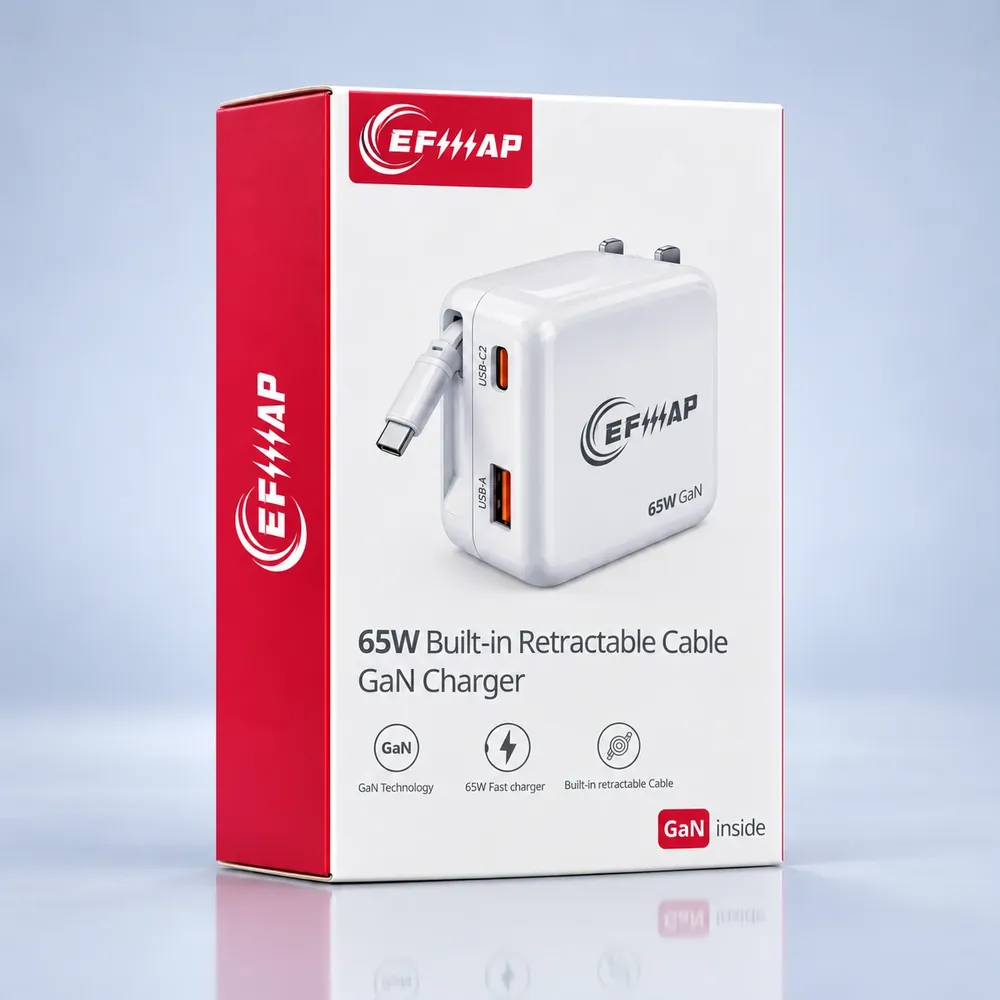
Take the first 500 chargers with your logo on the housing, packed the way we pack bulk orders: in strips without a retail box, or in a plain white box if you prefer. Order the printed retail box later at 1,000 pieces. You test the market without committing to artwork you might want to change anyway.
3. Accept a small premium on the first run
This is the most straightforward trade. A 300-piece trial carries the same setup as a 500-piece order, so it costs a little more per piece. Ask the supplier to show which part of the premium is setup and which part is the unit price. A fair quote can be split that way; a padded one usually can't.
4. Combine variants that share the same parts
Our XFC 35W comes in three port layouts (1C, C+A and 2C) built on the same housing. If you want two layouts, ask whether they can run together. And if you need several plug types, look at the CB ultra-thin series: the plug is a clip-on adapter, so one order of charger bodies can ship with a mix of US, EU, UK and AU adapters. With fixed-plug models, the minimum counts per plug type.
5. Put the reorder in writing
"We'll order much more later" is something every factory hears daily, and it carries little weight. A short written plan carries a lot more: "300 pieces now, 1,000 in March if sell-through is above X." Be honest about whether it's a commitment or a forecast. A forecast that turns out wrong is fine. A promise you break costs you the next negotiation.
6. Ask outside the busy season
Electronics factories in Guangdong are busiest in the months when brands build Christmas stock, and again in the run-up to Chinese New Year. A small run that is awkward in October is often easy to place in a quieter month. If your launch date is flexible, say so.
7. Ask the direct question
"What is driving this minimum?" It feels blunt. In our experience it is the question that moves things fastest, because once both sides know whether the problem is resin, setup or the box printer, the solution is usually obvious.
What we agree to, and what we turn down
To save you a few rounds of email, here is how we usually answer the common requests on a USB-C charger order.
| You ask for | Our usual answer | Why |
|---|---|---|
| 500 pcs, your logo, black or white | Yes | Our standard MOQ. No logo setup fee, free mockup. |
| 300 pcs, your logo, black or white | Yes, on request | A first trial. Slightly higher unit price. |
| 500 pcs in your brand colour | Not at 500 | Custom colour starts at 1,000 pcs because of the resin batch. |
| Custom printed box on a 500-pc order | Box starts at 1,000 | Printer's minimum. We pack the first run in strips or plain white boxes instead. |
| Mixed plug types inside one 500-pc order | Yes on the CB series | Clip-on adapters. Fixed-plug models count per plug type. |
| Your logo and custom box on 100 pcs at bulk price | No | Below the point where setup and materials make sense. |
| 300 now, written plan for 1,000 later | Yes | Predictable orders are worth more to us than a slightly bigger first order. |
| A free sample before deciding | Yes | One piece per model, up to two models, ready in 3 days. You pay the courier. |
The pattern is simple. Anything we can solve on our own line is open for discussion. Anything that depends on another supplier, like the printer or a special resin, has to work for them too.
A typical first-order conversation
Below is the kind of exchange we have with new buyers all the time. It isn't copied from one customer; it's a typical example, using our real terms.
Buyer: "We like the XFC 65W with an EU plug for an Amazon launch. Your MOQ is 500, but we'd rather start smaller. Is 300 possible? We'd also like our own printed box."
Us: "Yes, 300 pieces is possible as a first trial, at a slightly higher unit price than 500. The printed retail box starts at 1,000 pieces because of the printer, so for the first run we'd suggest your logo on the charger and plain white boxes. You can switch to your own box on the reorder. Shall we send a free sample with your logo first? It's ready in 3 days."
Buyer: "That works. If the first batch sells, we'd want 1,000 pieces with our box before Q4."
Us: "Good. At 1,000 pieces you're on the lower price step, and we can start the box artwork while the first batch is on the water. Send us your target date and we'll plan the slot."
Nothing dramatic happened there. The buyer got a smaller start, we got a clear path to a proper order, and the box question was solved by changing the packaging rather than arguing about the minimum.
Small orders still get the full quality check
Maple Sourcing raises a fair worry: small runs sometimes get squeezed in between big jobs and rushed. It does happen in the industry, so ask about it. On our line the checks don't change with the order size. Every charger, in a 300-piece trial or a 30,000-piece order, goes through a hi-pot test and an aging test under load. Any unit that fails is repaired and tested again on the spot, before it goes anywhere near a box. Final inspection follows AQL with zero accepted critical defects, 0.65 for major and 1.5 for minor, and you get an inspection report with the order.

What you should still do on a small order: confirm the lead time in writing, and if the order matters to you, book a third-party inspection before you pay the balance. We welcome inspectors. A small first order is exactly where you find out how a supplier works.
Mistakes that cost more than the MOQ
Pushing below what the job can carry
If a supplier agrees to a tiny custom run at the full-volume price, the missing money has to come from somewhere. Thinner parts, a cheaper capacitor, a different chip. You won't see it until the goods arrive. When a low MOQ looks too good, ask how it's possible.
Negotiating the MOQ on its own
A lower minimum that comes with a vaguer quality standard, a longer lead time or worse payment terms may not be a win. Look at the whole order. Connected Sourcing's guide covers this well: price, quantity, packaging, payment and inspection all move together.
Mixing up payment and quantity
Settle the product, quantity and price first. Then talk about payment. Throwing everything into one email makes it hard for either side to see what matters most.
Treating the first order as the whole relationship
The buyers who end up with the best terms are rarely the ones who fought hardest on the first order. They're the ones who paid on time, gave clear artwork, and came back with a reorder. That history is worth more than any trick.
What to put in writing before the deposit
Whatever you agree, make sure it's on the proforma invoice or purchase order before money moves:
- Quantity per model and per plug type, spelled out line by line.
- Unit price for that quantity, with the price for the next step if you plan a reorder.
- Packaging: strips, plain white box or custom retail box, and the box quantity if it differs.
- Logo position and colour, matched to the approved sample.
- Lead time in days, counted from deposit and artwork approval.
- Payment terms: ours are 50% before production and 50% before shipment by T/T, with L/C on request.
- Inspection: AQL levels, whether a third-party inspector will visit, and what happens if the lot fails.
- Warranty: ours is 24 months on every charger.
If you'd like to see where your order would actually be made before any of this, here's a short walk through our lines.
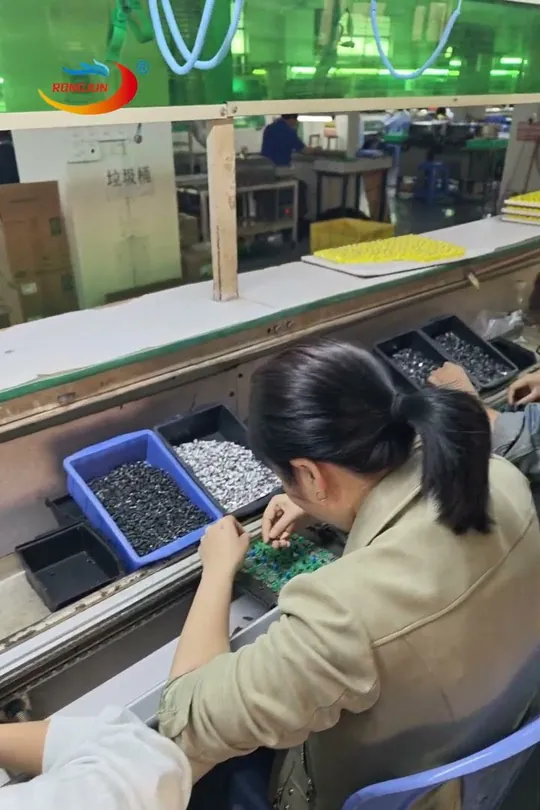 A 29-second walk through our Dongguan factory
FAQ: how to negotiate MOQ with Chinese suppliers
How do I negotiate MOQ with Chinese suppliers?
What MOQ should I expect from a Chinese charger factory?
Can I order 100 chargers with my logo from a factory?
Does paying a higher unit price lower the MOQ?
Is the MOQ per model or per order?
Why do Chinese factories have high MOQs?
Should I negotiate MOQ and payment terms in the same email?
Is a very low MOQ a red flag?
When is the best time to ask for a smaller run?
Do I need a sourcing agent to get a lower MOQ?
What is MOQ?
Starting with a small charger order?
Tell us the model, plug type and the quantity you have in mind. We'll send prices at each step and tell you straight away what we can do on a first trial.
Get a quoteMore from the Rongjun buyer's library
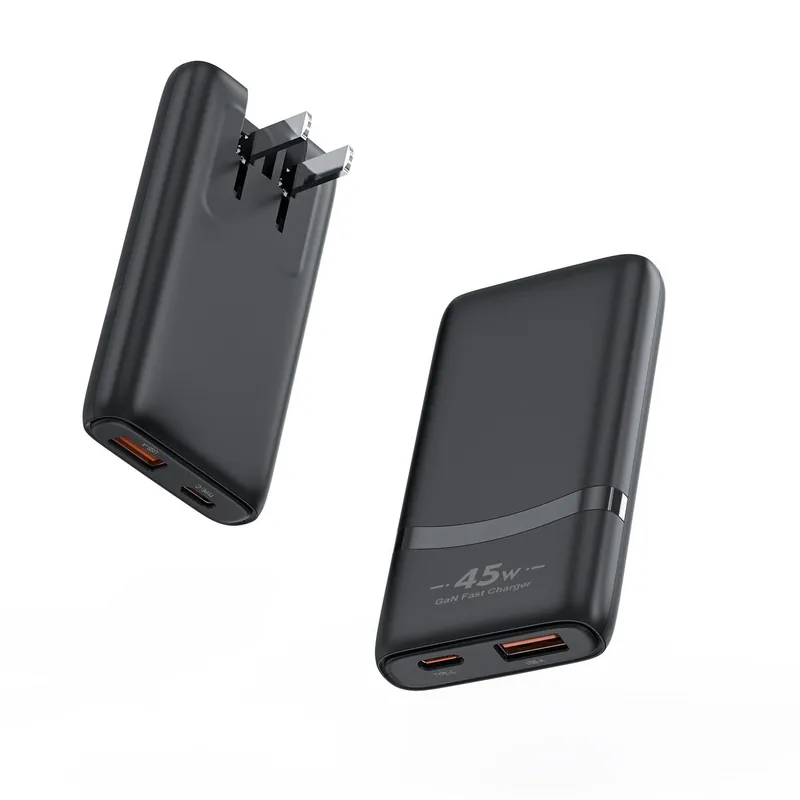
Low MOQ GaN chargers
Our low-MOQ offer in one place: 300 pieces on request, 500 standard, model by model.

Factory vs trading company in China
How to tell who you are really buying from before you send a deposit.
USB-C charger wholesale
Price ranges for every model and how our quantity steps work.