The EU Common Charger Directive, for Charger Brands
What the 2022 directive requires of phones and laptops, why it doesn't directly cover wall chargers, and the separate charger rules that start in December 2028.
Most articles about the EU common charger directive are written for phone makers: switch to USB-C, done. If you sell wall chargers, the picture is different. The directive mostly helps you, and the rules that will actually change your chargers are in a separate regulation that starts in December 2028.
We make USB-C GaN chargers in Dongguan for brands selling in Europe, so we follow both closely. This guide is based on the European Commission's own pages, and we link the official sources where it matters.
The short answer
| Common charger directive | EPS ecodesign regulation | |
|---|---|---|
| Legal reference | Directive (EU) 2022/2380, amending the RED 2014/53/EU | Regulation (EU) 2025/2052 |
| Applies to | Devices: phones, tablets, laptops and more | Chargers (external power supplies) |
| From | 28 Dec 2024; laptops 28 Apr 2026 | 14 Dec 2028 |
| Main points | USB-C port, USB PD fast charging, sale without a charger, labelling | USB-C port, detachable cable, power marked at each port, new logo |
What the directive requires of devices
The EU common charger directive is Directive (EU) 2022/2380. It amends the Radio Equipment Directive and, with a delegated regulation (EU) 2023/1717 that updates the technical references, sets four requirements.
1. USB-C as the common port
Handheld mobile phones, tablets, digital cameras, headphones, headsets, portable speakers, handheld video game consoles, e-readers, earbuds, keyboards, mice and portable navigation systems must charge through USB-C. That has applied since 28 December 2024. Laptops followed on 28 April 2026.
2. Harmonised fast charging
A device that charges at more than 5 V, 3 A or 15 W has to support USB Power Delivery. Brands can still add their own fast-charging protocols, but the device must charge at full speed with any compatible USB PD charger. As the Commission puts it, this stops producers from "unjustifiably limiting charging speed".
3. Selling devices without a charger
Consumers must be able to buy a device without a charger in the box. The Commission estimates that this, with the other measures, cuts electronic waste by 980 tonnes a year and saves consumers at least €250 million a year on chargers they don't need.
4. Labels and pictograms
Device packaging must show a pictogram saying whether a charger is included, and a label giving the power the device needs and whether it supports USB PD fast charging. The idea is that a buyer can look at the box and know whether the charger they already own is good enough.
What it means for wall chargers today
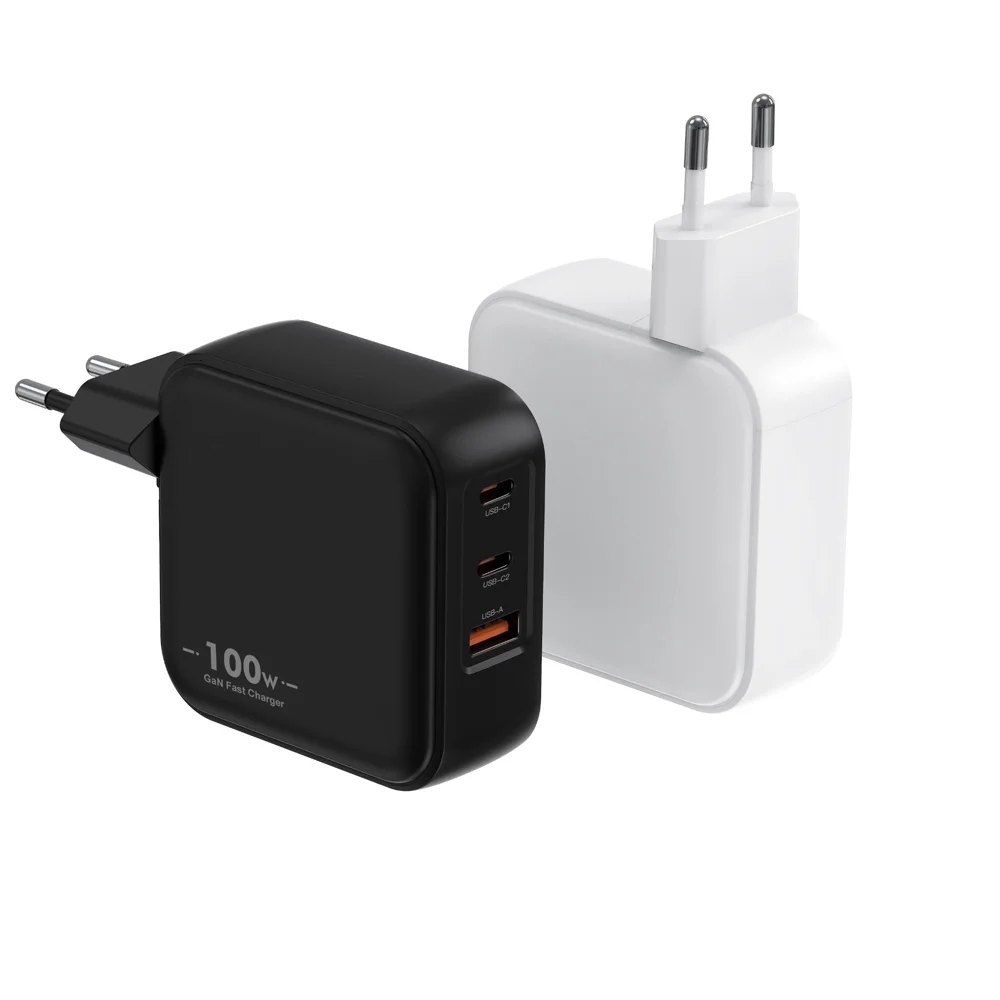
Here's the part most guides skip: the directive sets rules for devices, not for the charger you plug into the wall. A USB-C wall charger doesn't have to meet the directive's requirements, because it isn't one of the listed devices. It still needs everything a charger always needed in the EU, the CE mark under the Low Voltage and EMC directives, RoHS and the rest, which we cover in what certifications chargers need for Europe.
That doesn't mean the directive is irrelevant to charger brands. It changes the market in three ways:
- More people buy chargers separately. Once devices can be sold without a charger, the charger becomes a product people choose. That's the opportunity for accessory brands.
- USB PD becomes the protocol that matters. Every device above 15 W must support it, so a charger without USB PD is a charger that won't fast-charge new devices. Our PD vs PPS guide explains the protocols.
- Buyers will check watts. The device label tells the buyer how much power they need. Your charger's power has to be clear on the box and the listing so they can match it.
Nemko, a testing body, makes the same point from the device side: manufacturers that still use older ports have had to redesign. For charger sellers, the redesign has mostly already happened. USB-C with USB PD is where nearly all new wall chargers are.
The charger rules coming in 2028
The Commission's answer for chargers themselves is Regulation (EU) 2025/2052, an ecodesign regulation for external power supplies adopted on 13 October 2025. It applies from 14 December 2028. According to the Commission, its main interoperability requirements are:
- Chargers for radio equipment must be common chargers, with at least one USB Type-C port by default.
- Common chargers and cables should meet USB Type-C standards.
- External power supplies are to be placed on the market as common chargers, extending the idea beyond phones and similar devices.
- Common chargers must operate only with detachable cables.
- Each port must be marked with the power it supports.
- Common chargers must carry a new EU common charger logo.
There are exemptions, for example power supplies used in wet environments or with vacuum cleaners, certain power tools, toys and audio equipment. Until then, external power supplies still have to meet the current ecodesign efficiency rules in Regulation (EU) 2019/1782.
What this means in practice for a charger range sold in the EU after December 2028:
| Charger type | What to check before 2028 |
|---|---|
| USB-C only, detachable cable | Port power marking and the new logo on the housing |
| USB-C + USB-A | The USB-C port meets the rule; plan the marking for each port |
| USB-A only | Won't qualify as a common charger |
| Built-in (fixed) cable | Conflicts with the detachable-cable requirement; check carefully |
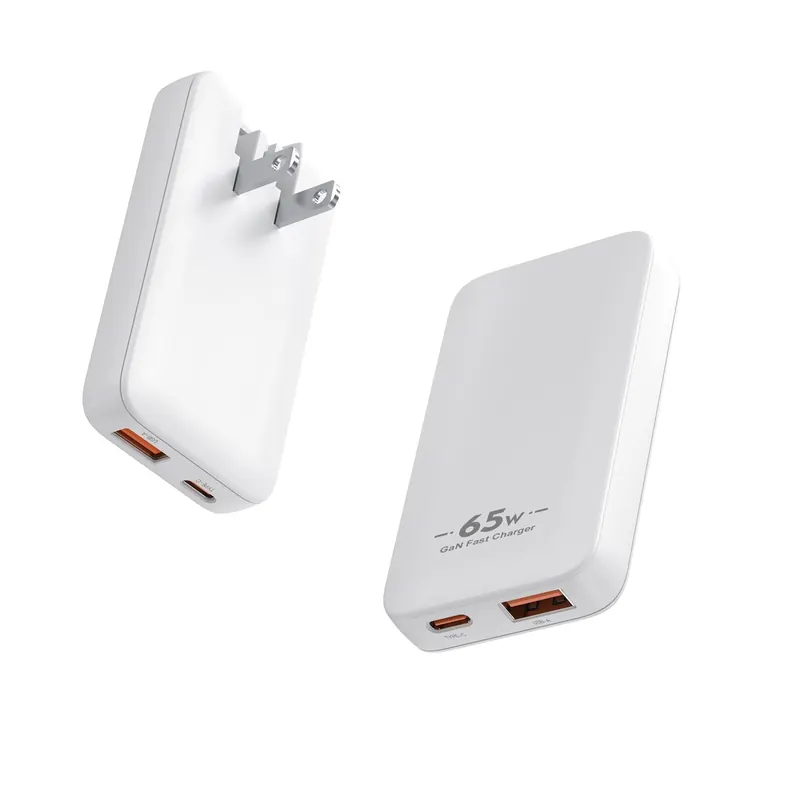
Markings are moulded or printed on the housing, so changes have to be planned into production, not added afterwards. If you're developing a new charger now that will still be on sale in 2029, design it for the 2028 rules from the start. Our custom charger design guide covers how that process works.
What else the EU is looking at
The Commission's page lists several next steps that charger and accessory brands should watch:
- More devices. A report on 30 June 2026 identified seven more categories that could be added: smartwatches, fitness trackers, smart glasses, wristbands, AR/VR headsets, personal drones and video game controllers.
- Cables. By 28 December 2026, the Commission will report on whether devices should also be sold without a cable.
- Wireless charging. No rules yet, but in February 2025 the Commission asked European standards bodies to develop a harmonised standard.
If cables are unbundled too, USB-C cables become another product people buy separately, which is worth thinking about if you're planning a range of chargers and accessories.
Does it apply in the UK?
Not in Great Britain. The UK's Office for Product Safety and Standards ran a call for evidence from October to December 2024 on whether to introduce similar rules. It said manufacturers were likely to adopt USB-C across the UK voluntarily anyway, to avoid running two supply chains, and that new legislation would give it powers to update the UK's Radio Equipment Regulations 2017.
So for now, British rules haven't changed, but the products sold in the UK are mostly the same as in the EU. Northern Ireland follows many EU product rules, so check its position separately if you sell there. Our UK wholesale page covers what UK importers need.
Three common misunderstandings
- "Chargers are banned from phone boxes." They aren't. The rule is that buyers must be able to choose a device without a charger. A brand can still offer a version with one, as long as the pictogram says so.
- "Every charger must be USB-C now." Not yet. Today the USB-C requirement is on devices. The requirement for chargers to have a USB-C port comes with the 2028 regulation.
- "Any USB-C charger will fast-charge any device." Only if both support USB PD at the power the device needs. A 20 W charger may charge a laptop that asks for 65 W very slowly, or not at all, which is why clear wattage on the box matters.
A checklist for charger brands
- Make sure every charger in your EU range supports USB PD on its USB-C port.
- Show the wattage clearly on the box and listing, so buyers can match it to the device label.
- Keep your CE documents current: LVD, EMC, RoHS and the efficiency rules.
- List any USB-A-only or fixed-cable chargers in your range and decide what replaces them before December 2028.
- For new designs, plan port power markings and the new logo into the housing.
- Watch the Commission's reports on cables and new device categories.
Our European supplier page shows the models we make with EU plugs, and our certifications page has the documents for each.
 Where our EU-plug chargers are made
FAQ: EU common charger directive
What is the EU common charger directive?
When did the EU common charger rules start?
Does the common charger directive apply to wall chargers?
What does Regulation (EU) 2025/2052 require of chargers?
Will chargers with a built-in cable be banned in the EU?
Does the EU common charger law require USB PD?
Does the EU common charger directive apply in the UK?
Do your chargers comply with the EU common charger rules?
Planning a charger range for the EU?
Tell us the markets and models you're considering. We'll send the CE documents and talk you through the 2028 requirements for each model.
Get a quote